Saturday, April 6, 2013

003

All the critics in the house say heyooo! 
(or: How I Learned to Stop Worrying and Love The Blog)

 I have been thinking a lot about fashion criticism, and more particularly about why it is a field that hardly exists. That statement might seem false at first blush, but only because of terminology. When putting it one way, criticism of fashion is the only thing that seems to exist both on the web, and in print (but mostly on the web). When magazines and fashion blogs put up content about shows and trends they are essentially providing a lot of commentary and criticism as well. Even image-based blogs--the biggest of those being The Sartorialist, but even for example, Jak & Jil blog--pull in their fair share of hubbub because those who follow the blog can leave comments expressing like or dislike--essentially little critiques on an outfit or a type of look or even on blogging culture itself. Then you also have people like Judith Thurman, writing for The New Yorker and Guy Trebay for The New York Times who focus on designers and trends in their larger roles as cultural critics.

On the other hand, when I think about the type of criticism I read for my Art History courses, it seems that very little fashion criticism exists. Who in the world of fashion can be seen as the equivalent of Clement Greenberg, Rosalind Krauss, or Hal Foster? Or in terms of cinema the equivalent of Eisenstein or Zizek? There are a lot of questions to be raised. Why does such critical discourse not yet exist?-- (especially when we consider the fact that humans have been dressing themselves far longer than they have been painting, writing literature, and making movies) Do we even need the equivalent of Krauss and Eisenstein? Which leads to the bigger question: is fashion even art? What would the implications be--if there were any at all--on the fashion industry if more literature was being written on race and gender and sustainability in relation to the industry? These are questions that I would like to see be answered by more people, but as for now I am merely a lowly undergrad who has neither the resources, the historical background, nor intellectual horsepower to tackle them all on my own. So instead I write on this blog.
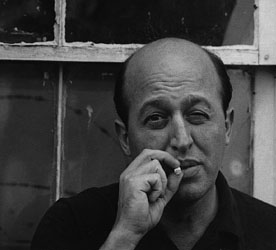

on the left Clement Greenberg: early champion of modernism and artists like Jackson Pollock. He was once punched in the face by Willem de Kooning (it was awesome!) on the right Slavoj Zizek: our generation's celebrity philosopher, who has written on film theory and "the gaze". But his most important writing is probably this text he wrote for an Abercrombie & Fitch catalogue

What's your guys' response (yeah all of you out there in the ether of the internet)? Should we consider fashion an art? Is criticism even necessary? I'd love to hear more thoughts (other than my own) regarding these questions! 

Friday, April 5, 2013

002

on the left: taken from The Sartorialist in 2009; on the right: from tumblr, date unknown

First let me preface this post by saying that though fashion may seem like a frivolous thing to write about, it's not. I'm tired of people dismissing fashion as something frivolous. After having spent six months in France, I wholeheartedly agree with Susan Sontag's point of view that France is one of the few countries in the world that doesn't demean fashion as mere women's play but rather holds it up as an accessible and important means to self-expression and creativity. I mention this because it is at times refreshing to be in the dressing room of some bougie store in the Marais and hear a man giving his opinion on the dress his wife is trying on--something more than a mere "Oh that looks nice." This goes along with how the French hold beauty and beautiful things in the highest regard, but anyway I digress.

I stumbled upon the first photo (posted on The Sartorialist in December of 2009) yesterday while I was clicking through his "Random Posts" section, and instantly recognized it as a favorite that I had saved to my hard drive some time in high school. The second image is one that came up on tumblr, and I "liked" it so that I could remember it for later.

It's still surprising to me that the first photo was taken more four years ago because that mix of boyish silhouettes is still relevant today. In fact, I wouldn't have been surprised if that first photo had been taken just a couple days ago somewhere in New York or Paris. There are a lot of elements to this outfit that I love. There's the layering of the shirt, sweater, and blazer that was seen as a bit unconventional (if you scroll through the lengthy comments section you can see that this was right around the time when this type of look started to make its way onto the street style scene and there were both staunch supporters and opposers); the blazer and sweater and shirt all hit in a way that is proportional and complementary despite the blazer's short length in comparison to the shirt. Then there are her jeans, whose holes nicely counterbalance her uneven pant rolling. The masculine brogues are still such a classic shape and color. Her Miu Miu bag, so functional and chic. I want to say I am drawn to it because of how the smaller handles work in relation to the bag's vertical shape, creating a really elegant line when it's held just that way on the crook of her elbow instead of being hung from her shoulder.

And finally, I want to speculate that this was taken at a time before the whole disengaged, "I'm very busy on my phone being important" look became way more superfluous in every street style blog ever. Even so, there's still something elegant about the way her phone is being held in her hands that keeps me looking.

The second photo works in a similar way, I think. There is something reminiscent here of Matisse's idea that "one square inch of blue is not the same as one square foot of blue" in that this all white look is really constructed by the different shades' proportions. The sweater, a tiny bit too small, hits above the waist in a way that the bright white t-shirt underneath billows out and creates a silhouette above the hips. The look doesn't become too top-heavy with the cropped pants hitting at the ankles, and the flat line otherwise created by her Converse. The look is boyish, but once again there is still something so elegant. What is it? Does she only pull it off by being thin and (ostensibly) beautiful, or is there something else?

These photos make a good pair because both of these women possess a style both masculine and elegant. Is it our changed notion of femininity--of what "feminine" can be and mean--that allows women to claim masculine pieces and silhouettes for their own? I think yes. However, I think the real draw in looks like this is their sense of irony: the look becomes sexy and appealing when shapes and cuts that are traditionally not seen as flattering on a women are worn anyway with a sense of playfulness and recognition.

001

Fashion Studies

This blog is a means to publish my thoughts on fashion and visual culture. I'm an undergraduate student at the University of Chicago in Art History who has otherwise been interested in fashion and dress since an early age (I would use my allowance money to buy issues of Vogue and Harper's Bazaar from my neighborhood bookstore and then hide them under my bed so my mom wouldn't think I was wasting my money on frivolities). As of late, it has struck me as interesting that there is no real critical discourse on fashion as there is for painting, photograph, and film. I think fashion's time will come, and in the meantime I'll use this space to write about what's intriguing me in the world of fashion as well as in the world of art.

On a personal level I also want to take the time and reflect upon images that prick me, that make me stop and pause for a little big longer. Tumblr and Pinterest and similar platforms make it so easy to become inundated and overwhelmed, to mindlessly scroll and "like" in the most detached way. At worst, looking becomes unconscious. But at best--truly at their best--these platforms feed into the cultural zeitgeist and give us good clues onto what kind of images--and the kinds of aesthetics--that are relevant today. So this blog is also an exploration of my own tastes and sense of style.

Real progress can only come about through discourse and dialogue, so I welcome all comments and questions!